The 7 Habits of Highly Effective Agile Testing
Published: March 20, 2020
Updated: September 21, 2025
Watch the Recording
A Personal Connection: From Covey’s Book to Agile Testing
I first read Stephen Covey’s seminal book, The 7 Habits of Highly Effective People, almost 30 years ago, when I was just beginning my career. Its timeless lessons not only shaped my professional approach but also transformed my personal life. When Covey passed away in 2012, I found myself revisiting his teachings, “sharpening my saw”, and re-committing to the principles that had made such a profound impact. Today, I want to share how these seven habits have influenced my journey in agile testing and how they can empower you to become a highly effective agile tester.
Lessons from Covey and Beyond
Stephen Covey’s work has had a transformative impact on millions. His 7 Habits have been embraced worldwide—not just in business, but in everyday life. Many readers attest to how Covey’s insights have been life-changing. For example, one reviewer on Goodreads shared,
“Covey’s habits transformed my outlook on work and life. I went from feeling overwhelmed by daily challenges to confidently managing my priorities and time.”
Many professionals have shared how the 7 Habits transformed their lives. One inspiring testimonial comes from a project manager who said,
“Applying Covey’s principles didn’t just improve my work efficiency—it revolutionized how I approach every challenge. I learned to focus on what truly mattered, and my team’s productivity soared.”
Another individual noted on a popular discussion forum:
“I was stuck in a cycle of reactive work. Embracing the 7 Habits shifted my mindset to proactive problem-solving, and it changed my career trajectory.”
These personal success stories resonate with the core message of agile testing: by prioritizing and optimizing your processes, you not only enhance your professional performance but also create a lasting impact on your team’s success.
These testimonials aren’t isolated; countless professionals have found that applying these principles has unlocked new levels of productivity and personal growth.
When I first encountered Covey’s work, I saw an immediate connection to the world of agile testing. In software testing, efficiency and effectiveness are not just ideals but necessities. Agile teams operate in a fast-paced environment where iterations come thick and fast. There’s no time for redundancy or missteps. Covey’s habit of “putting first things first” resonates deeply here: if you’re not efficient and effective, you risk burning valuable time and resources on the wrong tasks.
Bridging Timeless Principles with Modern Testing
Fast forward to today, and I find myself drawing on Covey’s principles more than ever, especially in the realm of agile testing.
At events like TestIstanbul, I’ve had the opportunity to deliver tailored versions of my “7 Habits of Highly Effective Agile Testers” talk. The international community of software testers there was incredibly receptive. The conversation transcended specific technologies and tapped into universal truths about quality, efficiency, and continuous improvement.
I even had the honor of sharing these insights during a webinar with the American Software Testing Qualifications Board (ASTQB). You can check out that session on YouTube. The discussion wasn’t solely about technology, it was about mindset, prioritization, and the habits that drive success in every facet of life.
The 7 Habits Explained
Ahead is an overview of each habit, along with practical insights from my keynote and real project experiences.
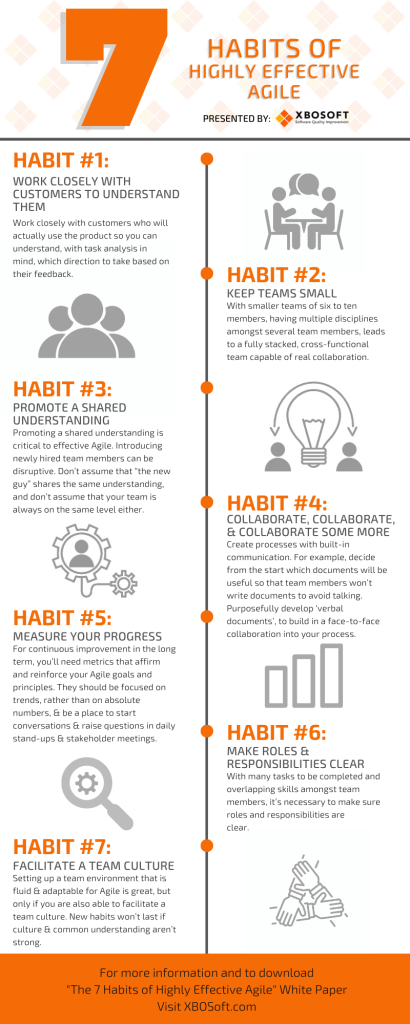
Habit 1: Work Closely with Customers to Understand Them
Agile works best when we design and test with actual end users in mind. This means engaging with customers early, using task analysis to see what they are trying to achieve, and adjusting based on their feedback. I often compare it to bike racing: knowing where the finish line is and the terrain ahead allows you to pace yourself and make the right moves.
Habit 2: Keep Teams Small
Small teams of six to ten people, with multiple disciplines represented, communicate more effectively and adapt faster. In large groups, signals get lost and coordination becomes a burden. Smaller teams create stronger relationships, quicker decision-making, and a clearer sense of shared ownership.
Habit 3: Promote a Shared Understanding
Never assume everyone interprets requirements the same way. Onboarding a new team member can easily disrupt alignment if shared understanding is not maintained. Regular check-ins, transparent documentation, and open discussion help keep everyone on the same page.
Habit 4: Collaborate, Collaborate, and Collaborate Some More
Collaboration needs to be built into the way work happens, not left to chance. This includes designing “verbal documents” that prompt discussion, deciding early which artifacts will be useful, and holding the kinds of conversations that prevent misunderstandings from turning into defects.
Habit 5: Measure Your Progress
Long-term improvement requires more than hitting numbers. Metrics should reveal trends, spark conversations, and help identify where adjustments are needed. In stand-ups or stakeholder meetings, use metrics to ask questions like “Why did this change?” and “How can we improve?”
Habit 6: Make Roles and Responsibilities Clear
When responsibilities overlap or remain undefined, work slows and accountability fades. Agile teams should be explicit about who owns what, while still supporting flexibility when the situation calls for it.
Habit 7: Facilitate a Team Culture
Agile thrives in environments where people trust each other, feel safe raising concerns, and share a common commitment to quality. Culture keeps good habits alive when tools or processes change. Without it, habits fade quickly.
Each habit is a principle you can apply immediately, no matter your role in the testing process.
Where the 7 Habits Come From
Over years of working alongside Agile and DevOps teams in healthcare, finance, e-commerce, and more, I noticed that the highest-performing teams shared a set of recurring behaviors:
- They worked closely with customers who would actually use the product.
- They kept teams small and cross-functional.
- They built a shared understanding instead of assuming it existed.
- They designed collaboration into their process.
- They made roles and responsibilities explicit.
- They measured progress in ways that encouraged conversation and improvement.
- They nurtured team culture so habits could take root.
These patterns survived technology shifts, process changes, and even full team turnovers. They became the basis for the XBOSoft adaptation of Covey’s philosophy: The 7 Habits of Highly Effective Agile.
Frequently Asked Questions
What are the 7 Habits of Highly Effective Agile Testing?
The 7 Habits are a set of guiding principles adapted from Stephen Covey’s work to the context of agile testing.
Can these habits really transform my approach to software testing?
Absolutely. Many professionals credit Covey’s 7 Habits with transforming both their personal and professional lives. By applying these principles to agile testing, you can develop a more focused, efficient, and resilient testing process that drives better outcomes.
What kind of improvements have others seen by adopting the 7 Habits?
Users of the 7 Habits have reported increased productivity, better prioritization of tasks, and a significant boost in team morale and efficiency. For instance, one tester noted, “Implementing Covey’s habits in our agile process has not only reduced our cycle times but has also created a culture of continuous improvement.” These testimonials underscore the transformative potential of these principles.
Where can I learn more about these agile testing habits and related best practices?
We recommend checking out additional resources like the original 7 Habits of Highly Effective People by Stephen Covey, exploring insights on TestIstanbul, and reading relevant posts on Joel on Software.
A Call to Action
The principles behind the 7 Habits have shaped leaders and teams for decades. Applied to agile testing, they provide a clear roadmap for building sustainable quality practices that last.
In today’s fast-moving digital world, agility isn’t enough — we need focus, shared ownership, and habits that put the user first every time. Start with one habit. Make it visible. Refine it. Then add another. Over time, these small changes compound into a culture of continuous improvement.
Your journey toward becoming a highly effective agile tester begins now. Adopt the habits, invest in your growth, and watch your testing process — and your impact — transform.
The XBOSoft Perspective
At XBOSoft, we have helped teams in many industries implement these habits. In some cases, “Agile” existed in name only when we began. Through hands-on collaboration, we helped integrate quality into every stage of their process, align on user priorities, and create the conditions for continuous improvement.
Our embedded QA approach means we work within your tools and workflows, so the habits fit naturally into your team’s rhythm. We focus on:
-
Identifying the habits with the highest potential impact.
-
Integrating them without slowing delivery.
-
Building practices that last through process or personnel changes.
Next Steps
- Download the full white paper: 7 Habits of Highly Effective Agile
- Watch the full ASTQB webinar for practical examples and stories from the field.
- Talk to us about embedding QA into your team’s culture without slowing, Reach out
Related Articles and Resources
Looking for more insights on Agile, DevOps, and quality practices? Explore our latest articles for practical tips, proven strategies, and real-world lessons from QA teams around the world.